

What is Montessori?


ABOUT MONTESSORI
Maria Montessori and the Montessori Method
Dr. Maria Montessori (1870-1952) was the first woman to receive a medical degree in Italy. She worked in the fields of psychiatry, anthropology, and education. She developed her philosophy of education based on observation of children of all social classes and in many countries. She believed that each child is born with a unique potential to be revealed, rather than a “blank slate” waiting to be written upon. Montessori recognized that the most important years for learning are those between birth and age six. She felt education should be an aid to life, a collaboration with nature.
To assist the child in achieving this natural potential within him/herself, Montessori used her vast experience with and observations of children to develop a method of education that allows the child to develop and learn naturally through spontaneous, self-directed activities. Montessori stressed the importance of preparing the best environment for the child, according to the different stages of life. She recognized that at certain times, young children have a special ability to focus on specific aspects of their environment. Montessori described these stages as sensitive periods, that being a length of time in a child’s life when he/she is most eager and best equipped to learn particular concepts. A young child effortlessly acquiring his native tongue is an example of a sensitive period in motion that we have all witnessed. As well, today neuropsychiatrists are now starting to prove scientifically the theories that Montessori formed through her extensive observations of children beginning over 90 years ago. The Montessori classroom (known as the prepared environment) allows the child the freedom to choose actively, to manipulate specifically designed materials and to work through cycles of learning according to his/her needs and capabilities, all within an organized framework. This active education encourages concentration and self-discipline while allowing the child to absorb new concepts and skills.
The Montessori teacher (called the Directress), offers new experiences and encourages enthusiasm for learning without interfering with the child’s independence. Children are encouraged to share accomplishments, resolve problems and to develop an understanding for the other members of their classroom community. In this atmosphere, acceptance and respect, is seen the development of responsible, self-directed and self-disciplined students with a love of learning. The aim of Montessori education is not to fill the child’s head with facts; it is to cultivate the natural desire to learn and the opportunity to reach
his or her fullest potential.
THE PREPARED ENVIRONMENT
Maria Montessori opened the first Casa dei Bambini (Children’s House) in Rome in 1907. This was an environment specifically prepared to meet the needs of the developing child. She sized tables, chairs and shelves down to their measure. She developed materials and exercises to match the interests that she had observed in children at different stages of development. She laid them out in orderly and organized fashion, and then she turned this prepared environment over to the child to explore and enjoy so that he/she might fulfill their greatest potential, physically, mentally, emotionally, and spiritually. Montessori classrooms all over the world today are prepared in the same manner to allow the children within them to unfold as these first children did. (Maria Montessori’s account of this first classroom can be found in her book The Discovery of the Child).


THE MONTESSORI GUIDE
In the prepared environment, the child is permitted to choose and work freely with self-correcting materials. The adult in the classroom is a specially trained Montessori guide, whose role in the classroom is foremost to prepare and maintain the environment for the children, adapting it to their ever-changing needs as required. It is also very important for the Guide to continually observe the children in their environment so that they can best accommodate their needs. The role of the Guide is not that of a traditional teacher. They are not there to merely bestow on the child the wealth of their knowledge.
Instead, they are the link between the Montessori materials and the child. Once introduced to the materials (through a one-to-one presentation for each exercise), the child is then free to use their own innate potential to educate themselves using the senses they were born with. This frees the child to learn in a non-graded, non-competitive environment at their own pace without negative or judgmental pressure. The child learns for the sheer joy of it and not just to please a teacher or for external rewards.
A.M.I.
Unfortunately, there are no restrictions on the use of the name Montessori. Therefore, it is important for parents seeking a Montessori school for their child to thoroughly research their prospective choices. One way for parents to do this is to look for the A.M.I. qualifications at the school. Maria Montessori and her son Dr. Mario M. Montessori founded the Association Montessori International in 1929. The Montessoris founded this organization for two reasons: one to safeguard her original contributions to philosophy and two: to maintain the standards of training for those wishing to learn her methods.
A.M.I. has functioned without interruption since its founding and is the most reliable authority on authentic Montessori theory and practice in existence.
A.M.I. training courses must meet rigid standards both in content and in teaching staff. The diplomas awarded are recognized worldwide.
The Children’s House Montessori School hires only A.M.I. certified Directors/Directresses to ensure high quality and standards.

Montessori Educated Leaders
What do the following EXCEPTIONAL Business Leaders have in common? A Montessori Education!
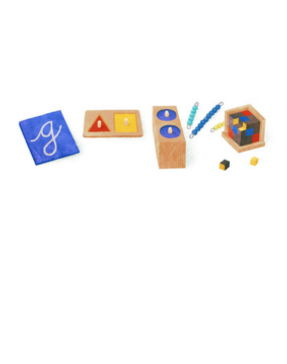
Sergey Brin & Larry Page
Google Co-founders

Jeff Bezos
Amazon.com Founder

Mark Zuckerberg
Facebook Co-Founder

Jimmy Wales
Wikipedia Founder
Montessori In the News
Montessori is in the News! Please take a moment to explore these informative resources!